
Raising Chickens on Your Own Land
There’s something pretty special about walking out to the chicken coop in the morning and gathering fresh eggs for breakfast.
For many families, raising chickens is one of the first steps toward a more self-sufficient lifestyle. You don't need a huge farm, expensive equipment, or dozens of animals to get started. A small flock can provide fresh eggs while giving your family a fun way to spend more time outdoors.
If owning a little more land is part of your dream, chickens are just one of the many ways you can put that space to use.
Here are a few things to know before getting started.
1. You Don't Need a Huge Property
One of the great things about chickens is that they don't require acres and acres of land.
A relatively small area can provide enough room for a coop and secure outdoor run. If you have more space—and local rules allow it—you may also be able to let your chickens roam over a larger area during the day.
The important thing is giving them a safe, clean environment with adequate shelter, food, water, and room to move around.
Before buying chickens, always check local zoning, HOA rules if applicable, and other regulations to make sure poultry is allowed on your property.
2. Start With a Small Flock
It's easy to get excited and come home with more chicks than you planned!
For beginners, starting with a manageable flock gives you a chance to learn about feeding, cleaning, egg production, and protecting your birds.
Different breeds also have different characteristics. Some are known for laying lots of eggs, while others may be especially cold-hardy, heat-tolerant, calm, or good at foraging.
Choosing chickens that fit your climate and goals can make the experience much easier.
3. Build a Safe Chicken Coop
Your chickens need a secure place to sleep and lay their eggs.
A good coop should provide:
Protection from weather
Ventilation
Nesting boxes
Roosting space
Easy access for cleaning
Protection from predators
On rural land, predator protection can be especially important. Foxes, raccoons, coyotes, birds of prey, and other animals may see your chickens as an easy meal.
A secure coop and run can make a huge difference.
4. Fresh Water and Feed Are Essential
Chickens need reliable access to clean drinking water and appropriate feed.
This is particularly important when you're raising chickens on rural or off-grid land.
If your property doesn't have a traditional water connection, think about how you'll provide water before bringing animals onto the property.
Depending on the location and applicable regulations, that could involve a well, storage tank, hauled water, or another suitable water source.
Just like gardening, water should be one of the first things you consider when planning a small homestead.
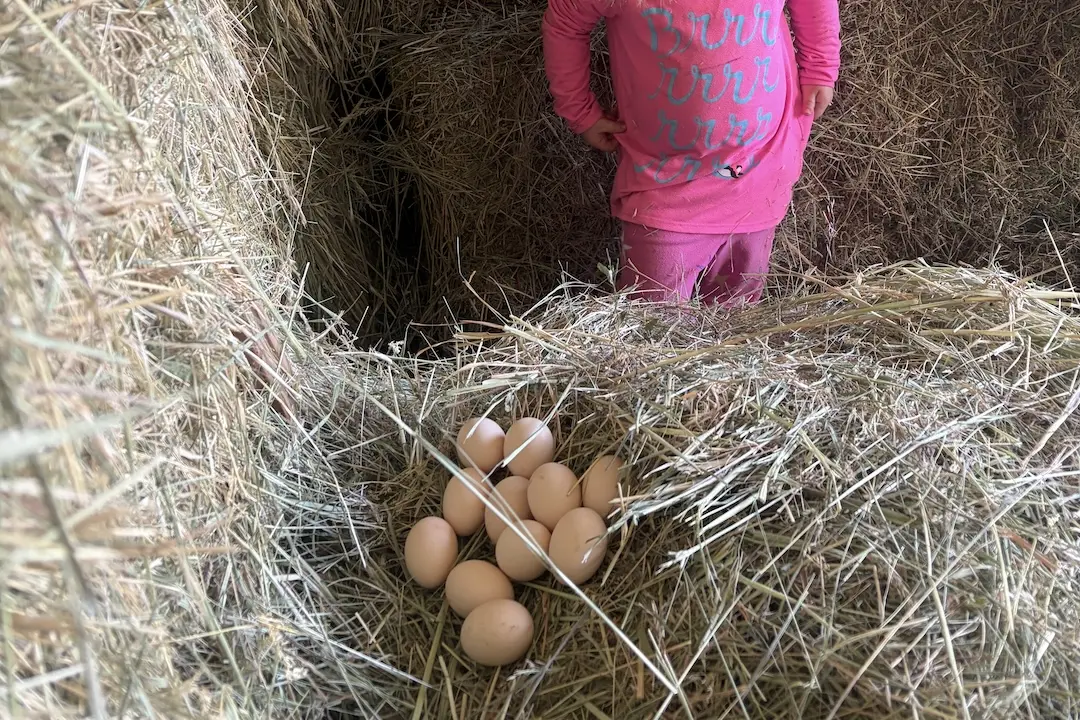
5. Egg Collecting Can Become a Family Tradition
For kids, one of the most exciting parts of raising chickens is checking the nesting boxes.
You never know exactly how many eggs you're going to find.
Collecting eggs gives children an opportunity to participate in caring for animals and see firsthand where some of their food comes from.
And there's something satisfying about bringing a basket of eggs into the house knowing they came from chickens you've cared for yourself.
6. What Do You Do With All Those Eggs?
Once a flock starts producing consistently, you may be surprised by how quickly the eggs add up.
Fresh eggs can be used for:
Breakfast
Baking
Family meals
Sharing with friends and neighbors
Depending on local laws, some chicken owners may also be able to sell extra eggs. Check your state and local requirements before selling eggs to others.
7. Chickens and Gardens Can Work Well Together
If you've also started a garden, chickens can become another part of your small homestead.
Chicken manure can eventually contribute valuable nutrients to compost when it is handled and composted properly. Chickens can also scratch through certain areas looking for insects and vegetation.
Just don't give them unrestricted access to a garden you care about—they can be surprisingly efficient at digging up plants!
If you're interested in growing food as well, check out our guide on How to Start a Garden on Rural or Off-Grid Land.
8. Chickens Are About More Than Eggs
Fresh eggs are certainly a benefit, but raising chickens can also change the way your family experiences your property.
Morning chores, feeding chickens, gathering eggs, working in the garden, and spending evenings outside can turn an ordinary piece of land into somewhere filled with memories.
You don't have to own a massive ranch to enjoy a little bit of the homesteading lifestyle.
Sometimes it starts with a garden, a chicken coop, and a few fresh eggs.
Could Your Own Piece of Land Be Next?
Maybe your dream isn't a huge farm.
Maybe you'd simply like enough room for some chickens, a vegetable garden, a few raspberry plants, and a place where your family can spend more time outside.
That's one of the things we love about land ownership: you get to imagine what your property could become.
If you're looking for recreational or off-grid land, browse the properties currently available from High Creek Land:
Browse Available Properties:
https://highcreekland.com/property-map/
Many of our properties are available with owner financing and simple monthly payments.
Before purchasing land for chickens, livestock, gardening, or homesteading, always verify the property's zoning, water situation, access, HOA/CC&R restrictions if applicable, and local regulations to make sure the property works for your plans.